Every system a three-warehouse crew runs on, built from zero.
First full month on the new systems (Oct 2025) vs. the latest full month (Sep 2026).
The business grew faster than the tools.
West Coast Deals sells sneakers, streetwear and apparel on live shows across TikTok Shop and Whatnot. Dozens of shows a day, streamers in two cities, and warehouse crews packing everything that sells.
Off-the-shelf software covered pieces of it. None of it matched how the floor actually worked, so the crew filled the gaps with spreadsheets, texts and memory.
I walked the floor, picked the problem that cost the most each day, fixed it, then picked the next one.
Five very different problems. One person found them, scoped them and built the fix.
None of these started as a software request. They started as something breaking on the floor every day. I found each one by being there, wrote down what it was costing, and built exactly what the crew needed. No agency, no outside developers.
The office numbers and the floor disagreed.
Sales, costs and payroll lived in different places and none of them matched what was actually happening in the shows that day. Decisions got made on last week's picture.
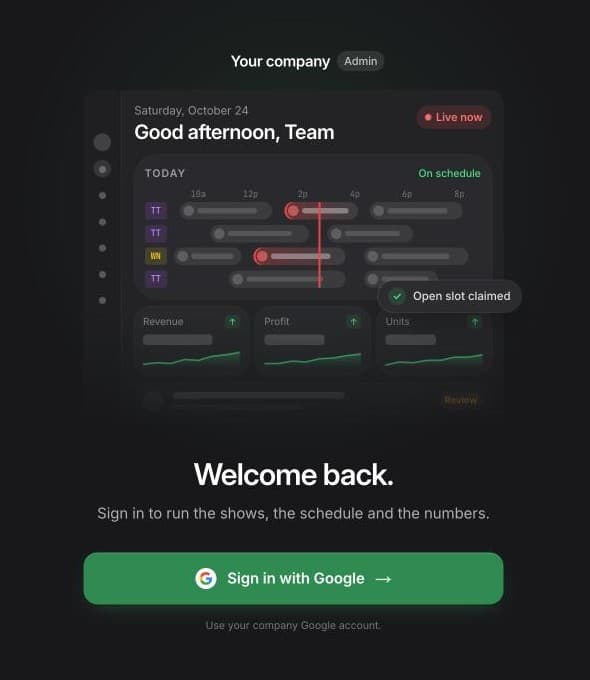
One live source of truth for the whole operation: every show, every sale, every cost and every hour, in one place, as it happens. If something stops working, it tells someone before a customer does.
Scheduling was a guess.
Streamers and crews were staffed by habit, not by demand. Busy hours ran short, slow hours ran heavy, and changes went out by text and got missed.
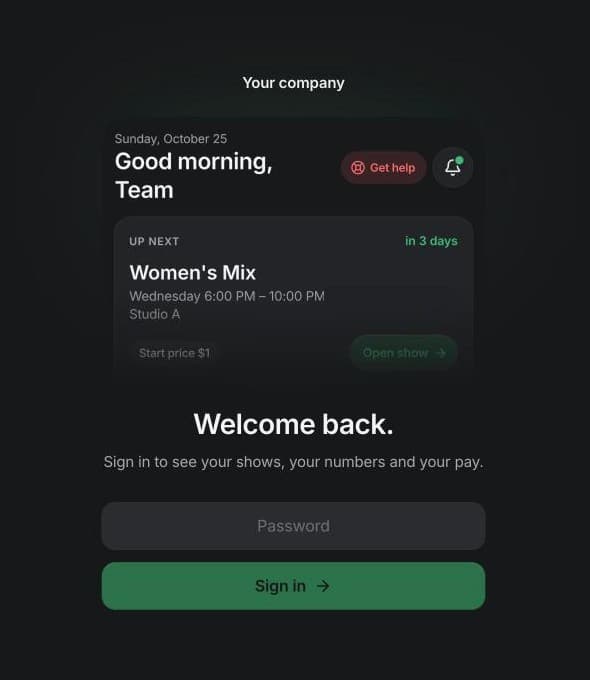
Hourly scheduling built on real demand, published to an app every streamer and crew member checks before a shift. Open shifts get claimed, changes get seen, and nobody is overstaffed on a Tuesday.
Pay took days to reconcile and still caused disputes.
Hours came from one place, scheduled time from another, and the two never agreed. Every pay period ended in a spreadsheet and an argument.
Pay that reconciles to the cent, with every variance flagged and resolved before the period closes. Each person can see their own hours and pay, so the dispute never starts.
Growth meant hiring more packers.
Every order needed someone to find it, label it and pack it by hand. Sales tripled; the only plan was to triple the people.
An auto-shipper that takes the manual steps out of labeling and packing. The warehouse absorbed the growth with fewer packing roles, not more.
Inventory arrived with no paperwork.
Thousands of pallets showed up with no manifest. Nobody knew what was in the building, so it couldn't be sold, counted or found.
A scanner that reads each pallet and turns it into inventory the crew can pick from. What used to be a wall of unknown boxes became stock with a location.